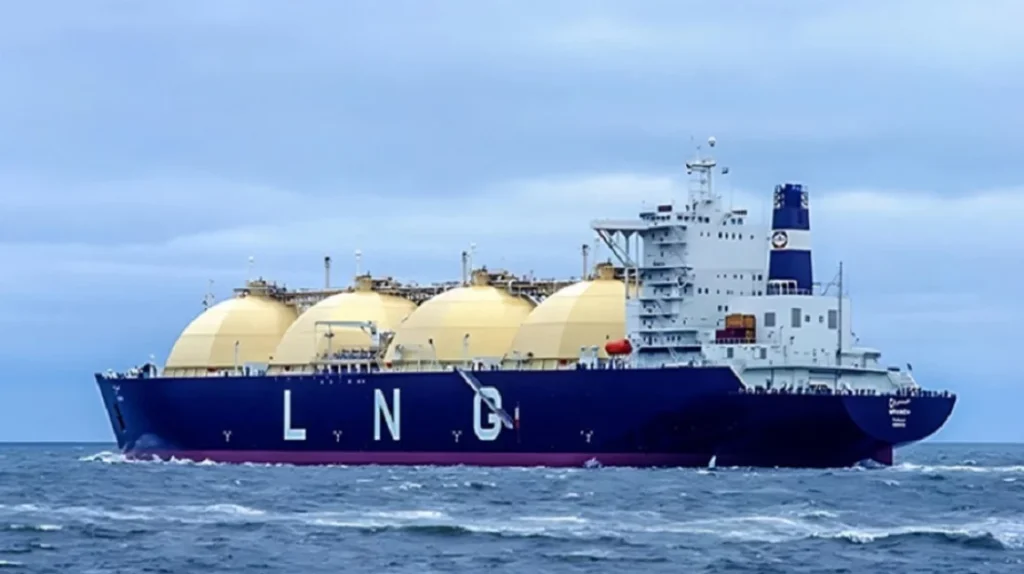
Due to the United States increasing tariffs, countries in South Asia, including Bangladesh, have pledged to import liquefied natural gas (LNG) from the U.S. in an effort to reduce the trade deficit. However, energy experts have issued warnings that this strategy will further destabilize the already volatile energy markets in these countries and hinder the development of renewable energy.
On Sunday, energy experts from several major global organizations issued a statement highlighting these concerns.
According to experts, the high tariffs imposed by the United States on solar panel imports have created new pressure on the renewable energy sector in Southeast Asia. In some cases, these tariffs have reached as high as 3,521%. At the same time, countries like Bangladesh, India, Vietnam, and the Philippines are entering into long-term LNG agreements with U.S. suppliers.
In January, Bangladesh signed a Memorandum of Understanding (MoU) with Louisiana-based Argen LNG. Later in April, Bangladesh’s interim Chief Advisor Muhammad Yunus wrote a letter to U.S. President Donald Trump pledging to increase LNG imports to help reduce the trade deficit.
Experts have warned that Bangladesh is already facing risks due to the high cost of LNG imports, and new imports from the U.S. could worsen the situation. They expressed concern that similar risks could arise in other South and Southeast Asian countries.
Sam Reynolds, an energy expert at the Australia-based Institute for Energy Economics and Financial Analysis (IEEFA), stated, “Signing long-term contracts to purchase U.S. LNG to reduce the trade deficit would be an expensive and misguided decision. It will raise both gas prices and production costs.”
Citing new research from the global research organization Ember, the statement noted that countries like Thailand, South Korea, and Pakistan are already spending more than 5% of their GDP on fossil fuel imports. If LNG import costs rise further, it could increase national debt and hinder the achievement of renewable energy targets.
Experts also emphasized that renewable energy holds greater promise for Asia’s sustainable future. Southeast Asia has vast potential in solar and wind energy—99% of which remains untapped. Despite U.S. tariff pressures, analysts believe regional cooperation could help advance the renewable energy sector.
Lauri Myllyvirta, an expert from the Centre for Research on Energy and Clean Air (CREA), said, “There’s no doubt that emerging economies will account for 70% of the world’s new solar capacity and 60% of new wind capacity by 2030.”
Christina Ng, an energy expert from the Energy Shift Institute, highlighted that the renewable energy sector plays a crucial role in protecting countries from geopolitical crises. She urged Southeast Asian nations to build strong domestic renewable energy markets and move away from costly LNG deals.
Muhammad Basit Ghauri of Renewables First added that markets in the Global South, particularly in Africa and South America, are rapidly shifting toward renewable energy, presenting a significant opportunity for countries in South and Southeast Asia.
Experts warned that if countries like Thailand or Bangladesh overinvest in LNG infrastructure, there is a risk of stranded investments. As the global energy landscape rapidly evolves and the cost of electricity generation from renewable sources continues to decline, heavy investment in expensive LNG could become a financial burden in the future.